History and nature on the East
Bulgaria region has long been inhabited by several people, including the Thracian, Romans, Byzantine, and Ottomans. The Ottomans ruled the region for 5 centuries, and it was on 1878 that Bulgaria got its independence, with help from the Russian empire. After the independent, Bulgaria was still a merging economy, and since it joined the losing part of WWI and WWII, it never managed to recover.
In 1946 a new era began for Bulgaria, under the communist regime of the Soviet Union and Bulgaria Seacoast got the many tourists as a favorite beach destination for Soviets, getting famous as the “Red Riviera”. Still, it was not enough to get a stable economy.
Nowadays, Bulgaria is blooming with a stable currency, tourism industry growing and due to the low cost of living, many retired are choosing Bulgaria for their final years.
UNESCO Heritage Places
- Boyana Church
- Madara Rider
- Rock-Hewn Churches of Ivanovo
- Thracian Tomb of Kazanlak
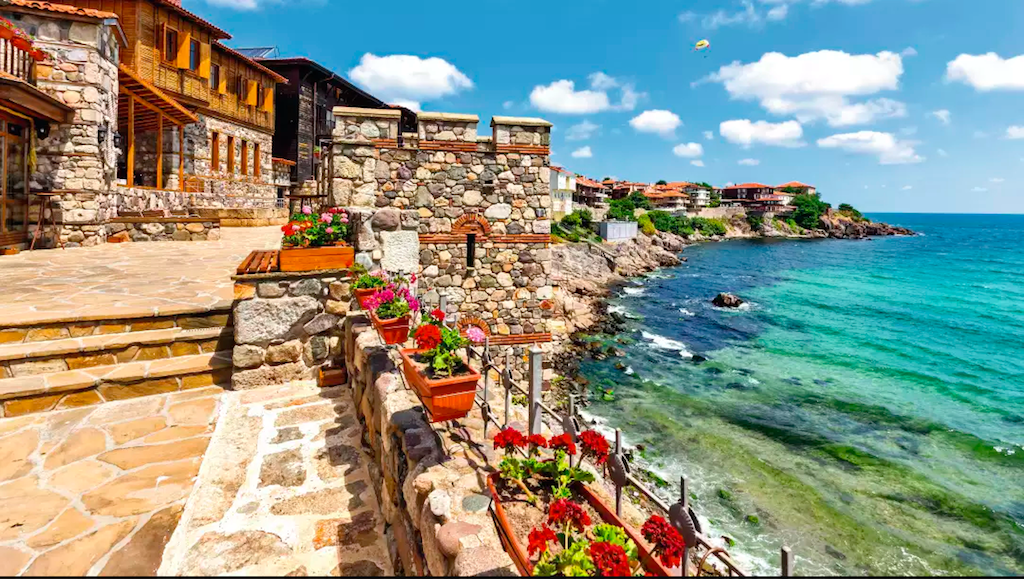
- Ancient City of Nessebar
- Pirin National Park
- Rila Monastery
- Srebarna Nature Reserve
- Thracian Tomb of Sveshtari
- Ancient and Primeval Beech Forests of the Carpathians and Other Regions of Europe
Bulgaria, perfect for Hiking
Bulgaria offers unique trails for long walks in the woods.
- Balkan Mountains – this mountain chain gives the name of the Balkan Peninsula. It stretches all along the country and is popular among the fans of the long distance hiking trips. One of the famous European Long Distance Routes (E3) follows its main ridge all the way from the west border of the country to the seaside. One of the three national parks in Bulgaria – Central Balkan National Park – is situated here.
- Rila Mountains – The highest point of the Balkans – Mount Musala (2925 m.) is situated in Rila. Beside it, the northwestern parts of the mountain are a popular hiking destination, rich to nature and cultural sights as the Seven Lakes Cirque, Skakavitsa Waterfall (the highest in Rila), Rila Monastery and the area of Malyovitsa. Rila National Park, the biggest in Bulgaria, is situated here.
- Pirin Mountains – Located south from Rila and close to Greece and the Mediterranean Sea, these mountains are famous with the biggest number of sunny days per year among the mountain ranges in Bulgaria. The most popular hiking area is Northern Pirin. Its highest peak – Mount Vihren (2914 m.) is on a third place on the Balkans, after Musala in Rila and Mount Mitikas in Greece. Another popular route follows the main ridge of the mountains, crossing a landmark, called “The Foal” – a very tiny part of the ridge, which is secured and accessible for hikers. Pirin National Park is established to protect the nature in these mountains. Pirin is also famous with a number of blue high mountain glacier lakes.
- Rhodope Mountains – This is the largest mountain range in the country, located near the south border of Bulgaria. The landscapes here are quite different than in Rila and Pirin – there are no such a jagged peaks, but endless “sea” of green hills and a number of small villages between them. Rhodopes offer a lot of opportunities for easy hiking in combination with getting to know the local culture and traditions. The area is inhabited from an old-time and nowadays both Christians and Muslims live here and contribute to the unique local culture.
Eat local
- Yogurt (kiselo mlyako) is very popular. It may be added to main dishes (especially liver based or with minced meat), eaten as a dessert, or mixed with water in a drink called ayranor ayryan.
- Sirene (white brined cheese, similar to Greek Feta) is a very popular ingredient in Bulgarian cuisine too. Salads are often topped with it, and it is often added to soups and main dishes.
- Banitsa (also diminutival called banichka) is a traditional Bulgarian food prepared by layering filo pastry with various ingredients. Cheese is the most popular one, but there are also spinach, potatoes, minced meat or kraut (in the winter season). Usually, people eat it for breakfast but it goes at any time of the day.
- In the bakeries, there are also various flour based cakes like kozunak (sweet bread, Easter cake with raisins), kifla (rolls with chocolate or marmalade) and some salty variations with cheese.
- Tarator is a cold soup made of yogurt and cucumber (dill, garlic, walnuts, and sunflower oil are sometimes added) and is popular in the summer season.
- Tripe soup (shkembe chorba) is eaten heavily spiced with garlic, vinegar, and hot peppers. It is popular as a hangover remedy. There are a few 24/7 places in Sofia where young people go early in the morning after a party to have a shkembe.
- Shopska salad is a traditional Bulgarian cold salad popular throughout the Balkans and Central Europe. Its name comes from the people born of with Sofia heritage called “shopi”. It is made with tomatoes, cucumbers, onion/scallions, raw or roasted peppers, sirene, and parsley.
- Snezhanka salad or Snow White salad is made from strained yogurt and cucumbers. It derives its name from the fairy tale character Snow White because of the predominantly white color of the salad.
- Turshia – pickled vegetables, served predominantly in the winter season. It is a traditional appetizer (meze) to go with the alcoholic drink rakia. It is often served in restaurants or it can be bought from supermarkets. There are different recipes made with garlic, chili peppers, celery, cauliflower, carrots, cabbage, and other vegetables, and dried aromatic herbs pickled in vinegar, salt, and different spice mixtures, which usually include whole black peppercorns, ginger, etc.
- Kyopoolu is a popular Bulgarian and Turkish relish made principally from roasted eggplants and garlic. Bell peppers, tomatoes, parsley are added.
- Green salad, very popular in the spring season and Easter, is made of lettuce, radish, cucumber. Boiled eggs are added on Easter. Sometimes it is served topped with yogurt.
- Lyutenitsa is a vegetable relish. The ingredients include tomatoes, peppers, eggplant, onion, garlic or black pepper. It comes in many varieties. Lyutenitsa comes in a jar and is often used as a spread on toast and bread. It is also popularly eaten with many types of meat, meatballs, and kebapcheta.
- Kebapche (plural kebapcheta) is grilled minced meat with spices (black pepper or cumin). The meat is shaped into an elongated cylindrical form, similar to a hot dog. Typically, a mix of pork and beef is used. Kebapche is a grilled food. It is never fried or baked.
- Kyufte (plural kyufteta) is minced meat, with traditional spices, shaped like a flattened ball.
- Sarma is a dish of grape or cabbage leaves rolled around a filling usually based on minced meat.
- Musaka is a potato-based dish with pork mince, and the top layer is usually yogurt mixed with raw eggs.
- Baklava is a popular sweet dessert. It is rarely served in restaurants, but it can be found in bakeries and supermarkets.
- Garash cake is commonly found in patisseries and restaurants. It is made of ground walnut kernels, sugar and topped with chocolate icing.
 Eurovel