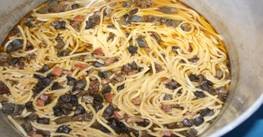
Description: Brownish color; Aroma: anho flavor; Texture: fine.
Special characteristics: Essentially based on anho giblets, pre-cooked blood and recessed bread.
Species, varieties or breeds: Anho / Lamb.
Definition of the geographical production area: Between Douro and Tâmega.
Link to the natural landscape: Pastureland for feeding the lambs.
Ingredients used: Garlic innards, blood, bread, onion, olive oil, salt.
Method of preparation: Onion is minced in a pan with olive oil and left to brown a little. Cut the meat raw into small pieces, pour into the stew, add as much salt as you need. After a few minutes add water. Let it cook for an hour and then add the bread, also cut into small pieces and preferably recessed (leave it for a day or two to get hard) and then add the blood that is mixed with your hands to loosen it and get undone. Nowadays there are those who add smoked meat to the verde, also in small pieces.
How to make it: In the old days it was made in an iron pot in the fireplace, always stirring with a wooden spoon. This way of cooking over a white fire made it tastier.
Ways of Marketing: In restaurants and as a starter.
Availability of the product throughout the year: Sold all year long.
Product’s History: It was a product that was widely used at weddings and parties, as a starter. It was also a way to make the most of other parts of the garlic. In the past it was a dish that was made in many party days and fell into disuse, having resurfaced a few years ago and being served in restaurants and parties. It was a welcome dish for the guests of the bride and groom. On the wedding day, the dish was prepared at the bride’s home (where the wedding was usually held) and served as a breakfast / appetizer before they walked to the church. This was a way to sustain and please the guests on the wedding day. In the southernmost region of the county, there was a particularity in the making of the Verde. This was made with dough instead of bread. It gave the dish a different consistency and served as a main dish. In the lower parishes of the county it was served as a starter at weddings.
Representativeness in local food: It is a characteristic dish of this region.
Availability of the product (disappearing, continuous supply, recovery): Continuous supply.
 Eurovel